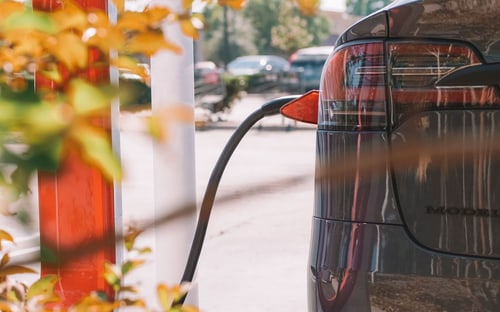
Every week another garage in San Clemente gets a new EV, and the same question comes up before the car even arrives: should the charger be hardwired into the wall, or should it plug into a NEMA 14-50 outlet? The hardwired vs plug-in EV charger decision sounds like an installer's detail, but it quietly sets your charging speed, how well the unit survives coastal air, and what the inspector signs off on. Both approaches deliver genuine Level 2 charging on a dedicated 240-volt circuit. The difference lives in the ceiling each one hits, the code each one triggers, and which one actually fits the house you own.
Key Takeaways
- A plug-in charger connects to a NEMA 14-50 outlet and can be unplugged and moved; a hardwired charger is wired directly into the circuit and stays put.
- Plug-in Level 2 charging tops out around 40 amps, while hardwiring is what unlocks 48-amp units that deliver roughly 11.5 kW.
- Receptacle-connected chargers require GFCI protection by code, which adds cost and is a frequent cause of nuisance tripping outdoors.
- San Clemente's salt air makes a sealed, hardwired unit the more durable choice for exterior walls and detached garages near the coast.
- Renters and anyone who may move soon usually prefer plug-in; homeowners settling in for the long haul tend to go hardwired.
Hardwired vs Plug-In EV Charger: What Each Setup Actually Is
A plug-in EV charger ends in a plug that fits a NEMA 14-50 receptacle, the same heavy-duty 240-volt outlet an electric range or RV hookup uses, while a hardwired charger has its wiring joined permanently inside the unit with no plug at all. Functionally both are Level 2 chargers and both need a dedicated 240-volt circuit run from your panel. A plug-in setup gives you a connection you can disconnect, swap, or carry with you. A hardwired charger is a fixed appliance, closer to a dishwasher than an appliance cord. That one structural difference drives everything below it, from the maximum amperage each can legally pull to how each one holds up after a decade of marine-layer mornings.
The 40-Amp Ceiling That Separates Them
The most consequential difference is power: a plug-in charger is capped at 40 amps, while a hardwired charger can run at 48 amps or more. The reason is a continuous-load rule in the electrical code, which only lets a circuit carry 80 percent of its rating for a load that runs for hours, so a 50-amp outlet circuit allows just 40 amps of actual charging. Going higher takes a 60-amp circuit and a unit wired straight to it. A Tesla Wall Connector, for example, provides up to 11.5 kW at 48 amps on that larger circuit, a real step up from the 9.6 kW a 40-amp plug-in setup tops out at. For one commuter car charging overnight, 40 amps is usually plenty. For a two-EV household, a large battery you want refilled quickly, or a second car down the road, that hardwired headroom is exactly why people choose it.
GFCI, Permits, and the Code Details That Trip People Up
By code, a plug-in charger on a receptacle must have GFCI protection, and that single requirement is where plug-in installs get more complicated than they look. The outlet needs a GFCI breaker or equivalent protection, which adds hardware cost, and because every Level 2 charger already carries its own internal ground-fault detection, stacking a GFCI breaker in front of it is a well-known source of nuisance tripping that can leave you with a car that quietly didn't charge overnight. Hardwired units connect directly and skip the separate GFCI breaker altogether. Either way this is permitted electrical work: the U.S. Department of Energy notes that home charging installations must meet local codes and that permits may be required, and in California that means a permit and an inspection under the state electrical code. A licensed electrician pulls that permit, and this is not a plug-and-go weekend project.
Salt Air, Outdoor Installs, and San Clemente Garages
In a coastal town, where the charger lives matters as much as how it is wired. San Clemente sits right on the water, and the same marine layer and salt air that pit patio furniture and dull car trim also go to work on an exposed outdoor outlet. The metal pins of a plug sitting in a NEMA 14-50 receptacle on an exterior wall are exactly the kind of connection that corrodes over time. A sealed hardwired unit has no exposed plug contacts, so it holds up better on a driveway-side or detached-garage wall near the beach. Home age factors in too: newer master-planned neighborhoods like Talega were often built with 200-amp panels that take a 60-amp hardwired circuit easily, while the older cottages around the Pier Bowl and Southwest San Clemente frequently run 100-amp service with detached garages, where capacity and the wiring run both need a real look before anything is chosen.
Cost, Reliability, and the Long View
On upfront cost, a plug-in install is often a little cheaper when a suitable outlet location already exists, since the electrician terminates to a receptacle instead of into the unit. That edge narrows once a code-required GFCI breaker goes on the plug-in side, and it can flip entirely if the outlet has to live outdoors in a weatherproof enclosure. Hardwiring adds a bit of labor but removes the plug, the receptacle, and the separate GFCI breaker as points of failure, which is why it tends to be the more reliable connection over the long run, especially outdoors. The charger hardware itself costs about the same either way, and many models ship ready for both so you decide at install. Rather than chase a generic price, the honest move is an itemized quote against your actual panel and the distance from it to where the car parks; that run length and your panel's spare capacity usually move the number more than the hardwire-versus-plug choice does.
So Which One Should You Choose?
Choose plug-in if you rent, expect to move within a few years, want the option to unplug and take the charger with you, or simply like the flexibility of a standard outlet a future owner can use for other things. Choose hardwired if you want 48-amp speed, the charger lives outdoors or in salt air, you want the cleanest and most reliable connection, or your unit runs above 40 amps and the code effectively settles it for you. One feature worth prioritizing on either path is smart scheduling: ENERGY STAR certified chargers that are networked let you monitor and control charging remotely and push sessions into cheaper hours, which pairs neatly with Southern California Edison's time-of-use EV rates and its Charge Ready Home rebate of up to $4,200 toward a qualifying Level 2 install. The connector you pick matters less than matching the install to your home and your rate plan.
The One Question That Settles It
Strip the decision down and it comes to one question: is this charger staying with the house, or might it leave with you? A charger that is staying, especially one pulling 48 amps or mounted on a coastal exterior wall, is almost always better hardwired, because that is where the speed, the sealed durability, and the cleaner code path all line up. A charger that might move, or that lives in a protected garage on a modest panel, is a perfectly sensible candidate for a plug-in NEMA 14-50. Everything else, the breaker size, the GFCI, the wire gauge, the permit, follows from that one call plus whatever spare capacity your panel has. When you are ready to turn the decision into an actual install, the team at San Clemente EV Charger can walk your garage, check your panel, and set you up with hardwired EV charger installation or a NEMA 14-50 outlet installation, with the full range of options laid out on the San Clemente EV Charger home page.
Where This Comes From
Not Sure Which Setup Your Garage Can Take?
Send a photo of your panel and a note on where the car parks, and we'll tell you plainly whether a hardwired unit or a NEMA 14-50 outlet is the right call for your San Clemente home.
Instant Quote